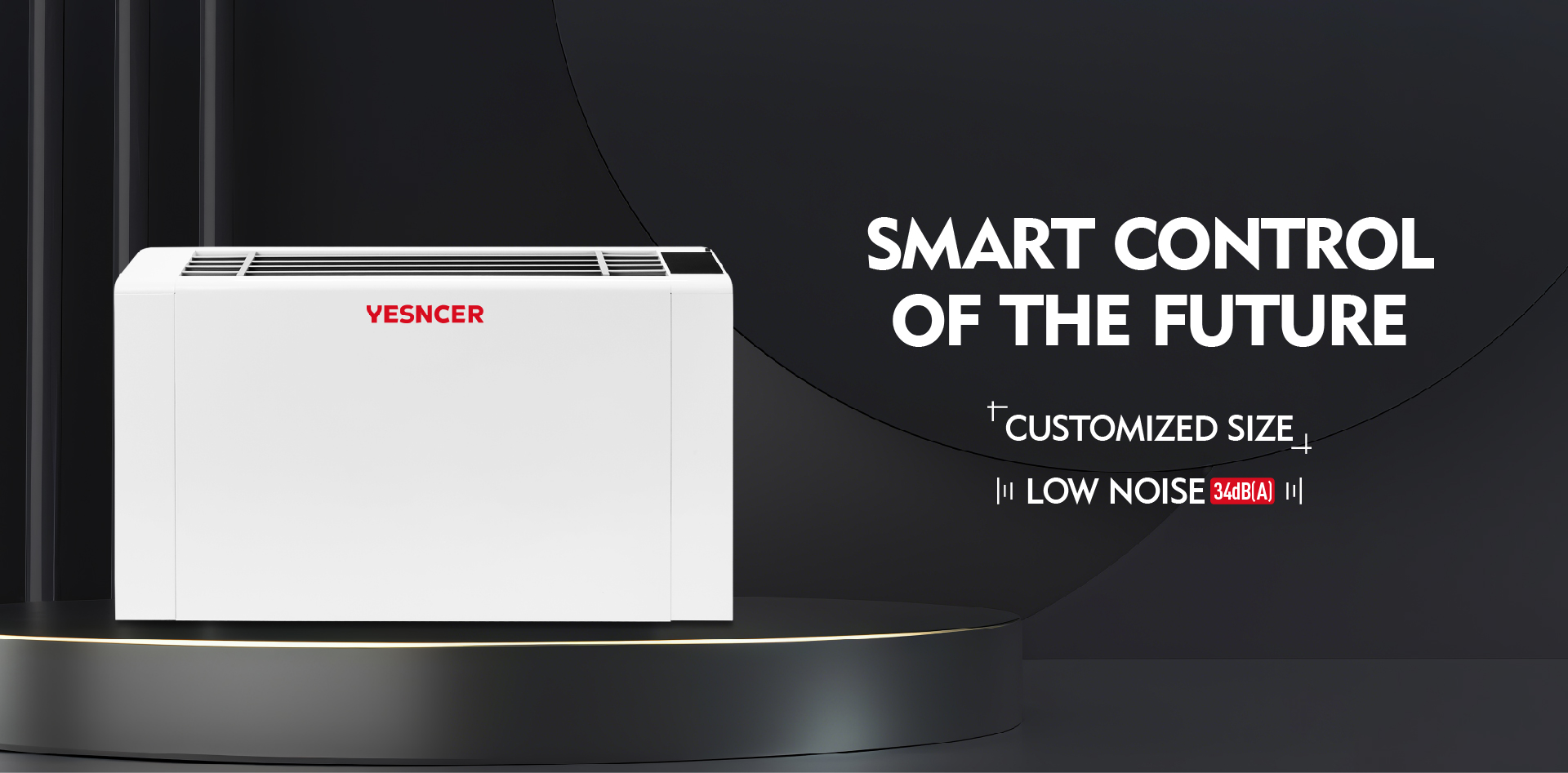
Fan coil unit principle, wiring control and common faults
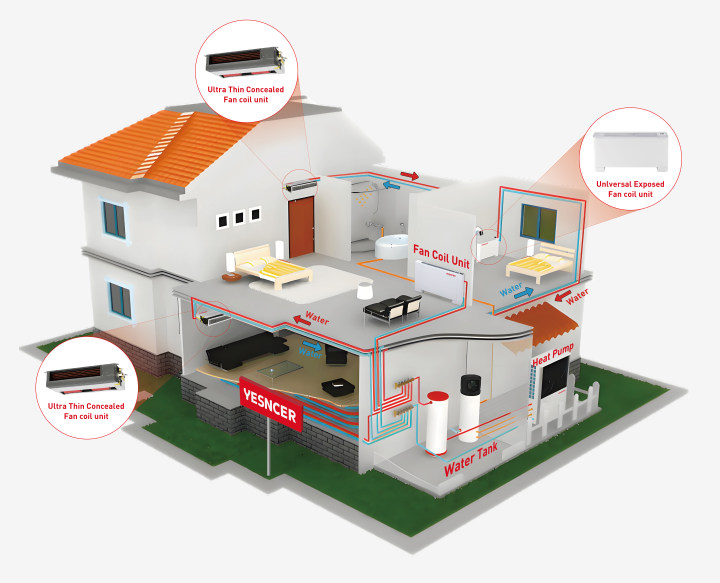
Fan coil air-conditioning systems use water pipes and smaller fresh air ducts. This design simplifies arrangement and installation. It saves space and allows individual adjustment. People widely use it in comfort air-conditioning environments. These environments require low temperature and humidity. They also have a variable number of rooms needing independent control.
Fan coil units work on a simple principle. Their mechanism is not as complex as central air conditioning. Imagine an “electric fan” that blows wind at your desired temperature.
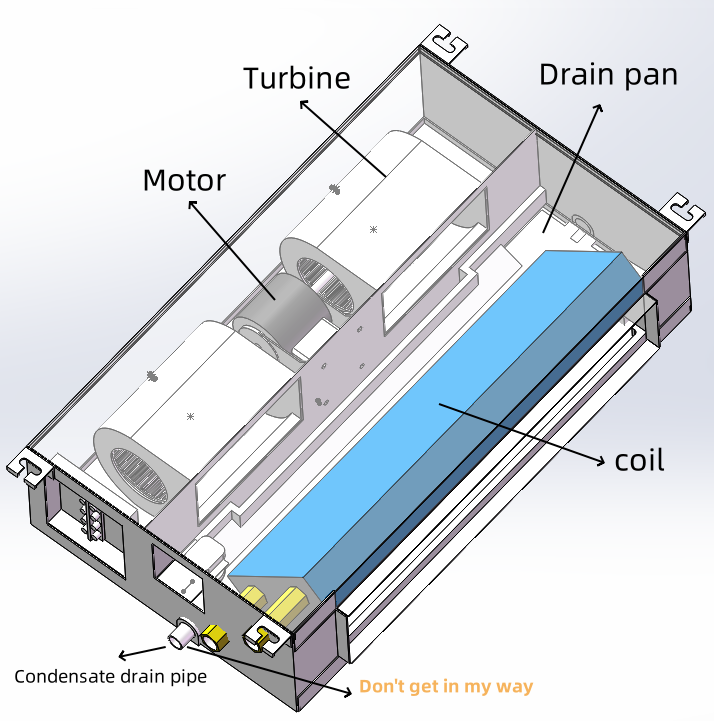
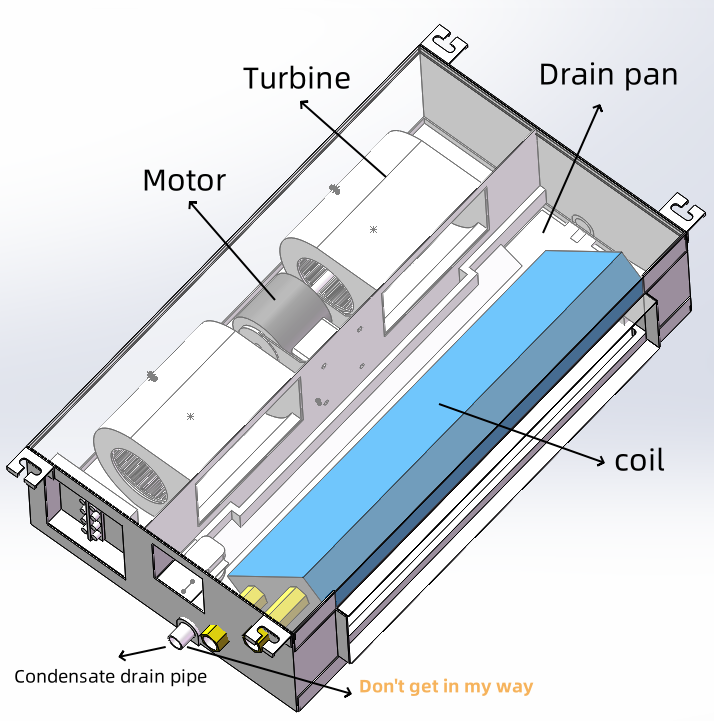
The fan coil structure includes several main components
The fan uses a multi-speed induction motor. It adjusts the input voltage to control airflow. It delivers air and exchanges heat with the coil surface. The fan is also a main noise source.
The coil works as an air-water heat exchanger. Ribbed tubes form the coil structure. Refrigerant water circulates inside the tubes. It exchanges heat and moisture with the air. This process improves heat exchange efficiency.
The condensate pan sits at the coil's bottom. It collects condensate and drains it through a pipe.
The air filter sits below the coil. It filters dust to maintain indoor air quality.
The fan coil operation includes two parts: water and air circuits
The water circuit uses centralized air-conditioning equipment. It supplies cold or hot media water. The water pump circulates the water through the coil.
The air circuit starts with the fan. It pulls in return air for heat exchange. The coil cools and dehumidifies the air. The system then sends the air into the room.
This cycle regulates indoor temperature and humidity. It ensures a comfortable environment.
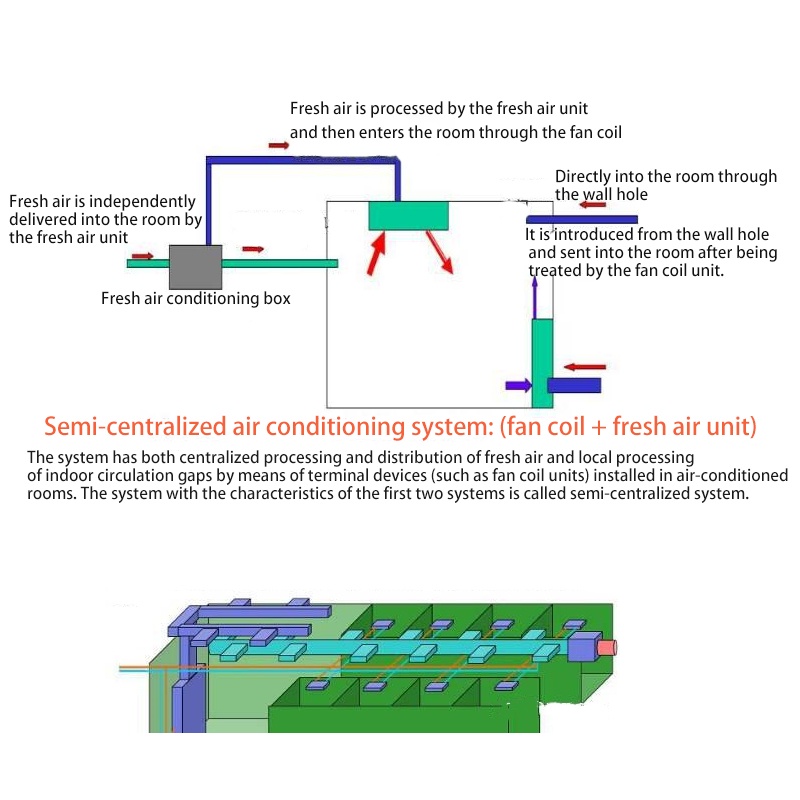
Fan coil plus fresh air system
Divided into two parts, the central air conditioning fan coiler and fresh air system, fan coiler is the end of the central air conditioning equipment, fresh air system burden of fresh air load to meet the indoor air quality, fan coiler with fresh air system is an important form of water system air conditioning, but also private buildings in the use of air conditioning form more common.
Advantages
Flexible control allows individual room temperature adjustments.
The unit's small size makes installation easy.
It suits remodeling projects in old buildings.
Zoning control becomes simple to achieve.
The system distributes hot and cold loads as needed.
Disadvantages
The system requires maintaining many units.
Managing units increases the workload.
Air quality remains poor with difficult secondary filtration.
Airflow distribution only suits rooms under 6 meters deep.
Rational design and proper equipment selection reduce these issues. Construction and installation improvements also help.
Points for fan coil design selection
Check the cooling capacity carefully
Combine the nominal capacity with actual conditions.
Avoid selecting excessive cooling capacity.
High capacity increases energy use and reduces efficiency.
Check the air volume based on room needs
Calculate air exchanges to match demand.
Smaller temperature differences need more air exchanges.
More exchanges improve indoor air quality.
Organize airflow supply and return reasonably
Ensure uniform temperature distribution.
Maintain a stable air supply effect.
Avoid airflow short circuits for better performance.

Fan Coil Control Principles and Wiring
Simple control
Use three-speed switch to manually adjust fan speed and start/stop.
Temperature control
Adjust the opening and closing of the electric two/three-way valve through the thermostat to automatically realize the three-speed conversion and constant temperature control of the fan.
Fan coil unit classification and parameter performance
A. Based on form: horizontal concealed fan coil , horizontal exposed fcu, vertical exposed fan coil unit, cassette fan coil.
B. By thickness: ultra-thin fan coil, standard fan coil.
C. Depending on condensate pump: standard or luxury models.
D. By number of rows: two-row or three-row designs.
E. According to standard: two-pipe or four-pipe systems.

Effect of parameter changes on performance
Water supply temperature: For every 1°C increase, the cooling capacity decreases by about 10%.
Air volume change: A decrease in air volume will reduce the cooling capacity, but increase the air handling enthalpy difference.
Supply and return water temperature difference: An increase in the temperature difference will reduce the cooling capacity, so it needs to be adjusted carefully.
Conclusion
As the terminal equipment of central air conditioning, fan coil units have outstanding performance in energy saving and flexibility, but reasonable design, correct selection and scientific maintenance are the key to ensuring their performance. Understanding their structure, working principle and common problems will help achieve better results in practical applications.
130mm Slim Exposed Fan Coil Unit Design Explained for HVAC Engineers
Low-Temperature Air Source Heat Pump for Sustainable Heating
Related Article
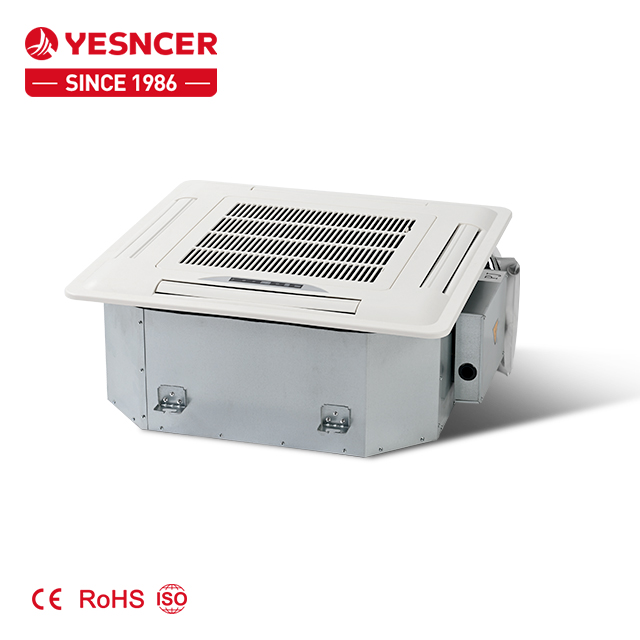
The YESNCER 4-Way Cassette Fan Coil Unit (Model: FP-34 ~ FP-238) is engineered for high-performance air conditioning — ideal for hotels, offices, hospitals, schools, and luxury residential buildings.