
How does Ground source heat pump change the heating and cooling industry?
Ground source heat pump uses shallow geothermal energy. It achieves heating and cooling efficiently. Underground pipes transfer heat to buildings. The system supports winter heating and summer cooling. It has higher energy efficiency than air source heat pumps. Ground source heat pumps also operate more stably. They promote building energy conservation and low-carbon living.

Working principle of ground source heat pump
The operation of ground source heat pump is based on the constant temperature characteristics of underground heat and the principle of thermodynamic cycle. It is mainly composed of three parts: underground pipe heat exchange system, heat pump host and indoor terminal system.
Winter heating
In winter, the ground source heat pump absorbs heat from the soil or groundwater through the underground pipe, and increases the temperature through the compressor, and transfers the heat to the room to achieve heating by natural convection or radiation. This process effectively utilizes the underground heat to ensure indoor warmth and comfort.
Summer cooling
In summer, the ground source heat pump transfers indoor heat to the ground. The heat pump host takes the heat away from the room through the refrigerant circulation, and then releases it into the underground soil or water through the underground pipe, forming an efficient refrigeration cycle and providing a cool indoor environment.

Performance characteristics of ground source heat pumps
High efficiency and energy saving
The energy efficiency ratio (COP) of ground source heat pumps is usually between 3 and 5, which is significantly higher than traditional heating and cooling systems. This is due to the constant temperature conditions underground, which reduces the energy consumption of the equipment.
Stable operation
Whether it is severe cold or scorching heat, the ground source heat pump can maintain stable operation and avoid extreme weather affecting the heating or cooling effect.
Environmental advantages
The energy consumption of ground source heat pumps is 50% to 70% lower than that of traditional systems, and it reduces the emission of greenhouse gases such as carbon dioxide. It is an important technology to promote carbon neutrality in the construction industry.
Comfortable and healthy
The heat output by the ground source heat pump is evenly distributed and will not cause dryness or excessive temperature differences, providing users with a healthy and comfortable indoor environment.
Durable and economical
The service life of underground pipes usually exceeds 50 years, and the life of the heat pump host can also reach 15 to 20 years, reducing the replacement cost of long-term operation.
The structure of ground source heat pump
The buried pipe heat exchange system uses high-density polyethylene pipes. These pipes exchange heat with soil or groundwater. Horizontal pipes, vertical pipes, and groundwater wells are common types.
The heat pump host includes a compressor, evaporator, condenser, and throttling device. It transfers and promotes heat through refrigerant phase changes. Water source and ground source heat pumps are the main types.
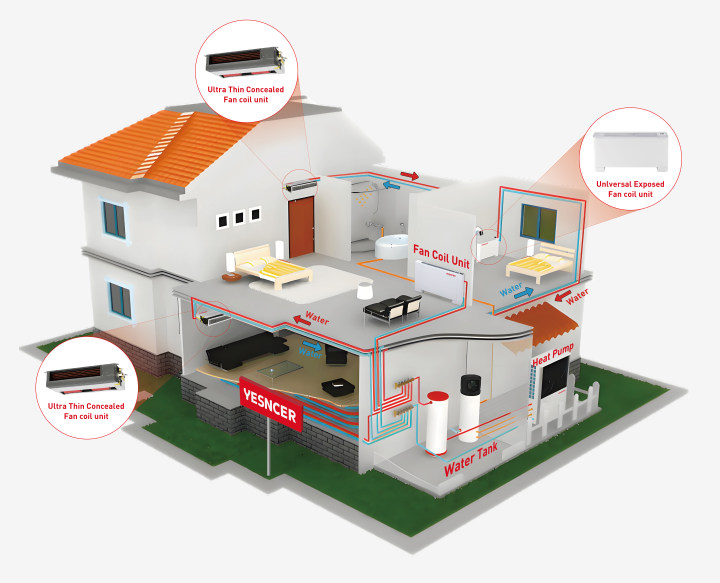
The indoor terminal system uses fan coils, floor radiation, and air ducts. These terminals transport heat or cold to indoor spaces. Selecting the right terminal optimizes comfort and energy savings.
The control system uses sensors, switches, and controllers. It ensures automatic control and optimized operation of the system. Advanced strategies improve energy efficiency and reliability.

Application cases of ground source heat pumps
A large shopping mall with a construction area of 50,000 square meters uses a ground source heat pump system. The project installed 500 100-meter-deep vertical underground pipes and equipped five 450kW heat pump hosts and fan coil unit terminal equipment. Compared with traditional air conditioning systems, this project saves about 40% of operating costs every year, reduces hundreds of tons of carbon dioxide emissions, and demonstrates significant energy-saving effects.
Advantages and disadvantages of ground source heat pumps
Advantages
High energy efficiency: Reduce energy consumption and operating costs.
Stable and reliable: Not limited by external weather conditions.
Environmental protection and energy saving: Reduce carbon emissions and support the development of green buildings.
Comfortable and durable: Provide a healthy indoor environment and long equipment life.
Disadvantages
High initial investment: The cost of underground pipe construction and equipment is high.
Site requirements: Not friendly enough to areas with tight land resources.
Complex construction: A professional team is required to complete installation and commissioning.
Maintenance professionalism: High requirements for management and maintenance of system operation.
Conclusion
Ground source heat pump technology is becoming an important choice in the field of heating and cooling due to its high efficiency, energy saving, environmental protection and reliability. Although the initial investment is high, its low cost and environmental benefits in long-term operation are enough to make up for the initial investment. In the context of energy conservation, emission reduction and low-carbon development, ground source heat pump is undoubtedly one of the important directions of future building energy systems.
Low-Temperature Air Source Heat Pump for Sustainable Heating
What are the main functional sections of a combined air handling unit?
Related Article

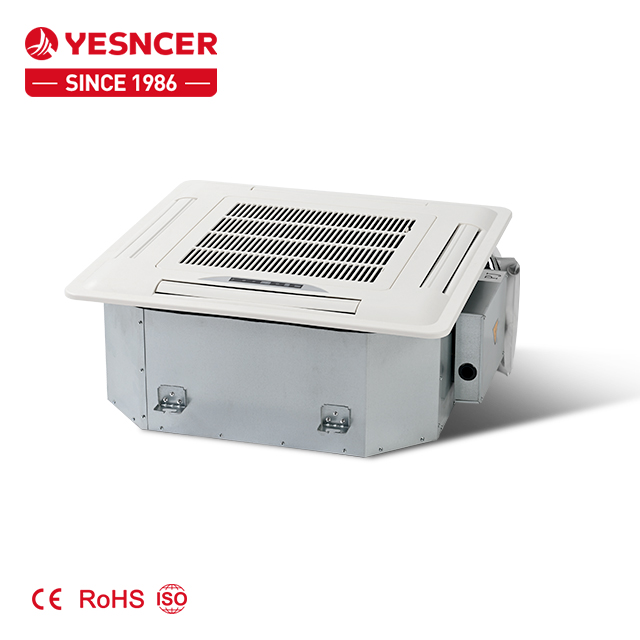
The YESNCER 4-Way Cassette Fan Coil Unit (Model: FP-34 ~ FP-238) is engineered for high-performance air conditioning — ideal for hotels, offices, hospitals, schools, and luxury residential buildings.