Comparing Screw and Centrifugal Compressors in HVAC Systems

When choosing an air compressor for HVAC systems, you have two main options: screw compressors and centrifugal compressors. Both compressors handle large volumes of air, but each type excels in different areas. Therefore, understanding the differences between them helps you select the best one for your specific needs.
Screw Compressors: Overview and Benefits
Screw compressors are simple and reliable. These compressors consist of two interlocking rotors that rotate in opposite directions. As they rotate, the rotors trap and compress air. This mechanism ensures a steady, pulsation-free airflow, making it ideal for many HVAC applications.
You can choose between two types of screw compressors: oil-injected and oil-free. Oil-free screw compressors, for example, are ideal for clean environments like the pharmaceutical and food processing industries, where oil contamination can be problematic. On the other hand, oil-injected screw compressors use oil for lubrication, which improves efficiency and extends the compressor's lifespan.

Centrifugal Compressors: Overview and Advantages
In contrast, centrifugal compressors use high-speed rotating impellers to compress air. These impellers add kinetic energy to the air, increasing its velocity. As the air passes through a diffuser, it converts kinetic energy into pressure. Centrifugal compressors are commonly used in large industrial applications that require high airflow.
Moreover, centrifugal compressors typically operate without oil, ensuring cleaner air. They are perfect for industries like food, beverage, and pharmaceuticals that need oil-free air for their processes.

How They Work: A Closer Look
Both screw and centrifugal compressors perform the same basic function—compressing air—but they do so in different ways:
- Screw Compressors: Air enters the compressor through an intake valve. The two rotors rotate in opposite directions, trapping air between them. As the rotors continue to rotate, they reduce the air volume and compress it. Finally, the compressed air is expelled through the exhaust valve.
- Centrifugal Compressors: Air enters the compressor and flows into high-speed impellers. These impellers increase the air's velocity. As the air moves through a diffuser, the kinetic energy converts to pressure.
Key Differences to Consider
- Energy Efficiency: When it comes to energy efficiency, screw compressors for variable loads excel in partial load conditions, making them ideal for applications with varying air demands. Energy-efficient screw compressors, for instance, are perfect for systems that need variable airflow, such as heat pumps. In contrast, centrifugal compressors perform most efficiently under full load, making them ideal for applications where airflow demands remain constant.
- Maintenance: On the other hand, screw compressors typically require more frequent maintenance due to their moving parts. Low-maintenance centrifugal compressors, however, have fewer moving components, which leads to lower maintenance needs and reduced operational costs.
- Noise and Vibration: When considering operational comfort, screw compressors produce more noise and vibration, especially during startup and shutdown. Conversely, centrifugal compressors run more smoothly and quietly, making them better for noise-sensitive environments.
- Cost: In terms of cost, screw compressors have a lower initial cost, which makes them an attractive choice for smaller HVAC systems. However, their higher maintenance frequency leads to higher long-term operating costs. In contrast, centrifugal compressors have a higher initial cost but are more durable and cost-effective over time due to their lower maintenance needs.
- Capacity and Size: In terms of size and capacity, screw compressors are flexible and suitable for applications with varying loads. Their compact design makes them ideal for smaller HVAC systems. However, for high-capacity applications, centrifugal compressors are better suited. They can handle larger volumes of air, making them perfect for large industrial systems.
Choosing the Right Compressor for Your Needs
Now that we have examined the key differences between screw and centrifugal compressors, it’s time to decide which one suits your needs best.
- Screw compressors are ideal for systems that need to handle variable loads or require compact, cost-effective solutions. They excel in applications where air demands fluctuate.
- Centrifugal compressors, on the other hand, are more suitable for large industrial systems that require constant, high-volume airflow. Their design makes them ideal for large-scale applications with stable and predictable airflow needs.
Conclusion
In conclusion, both screw and centrifugal compressors offer unique advantages. Energy-efficient screw compressors provide flexibility, efficiency, and reliability for varying load conditions, while centrifugal compressors excel in handling high air volumes with minimal maintenance. By considering your system’s requirements—whether for small-scale or large industrial use—you can choose the right compressor for your HVAC needs.
Fresh Air Ventilation Systems VS Fan Coil Units
Here's What You Should Know About Fan Coil Units
Related Article

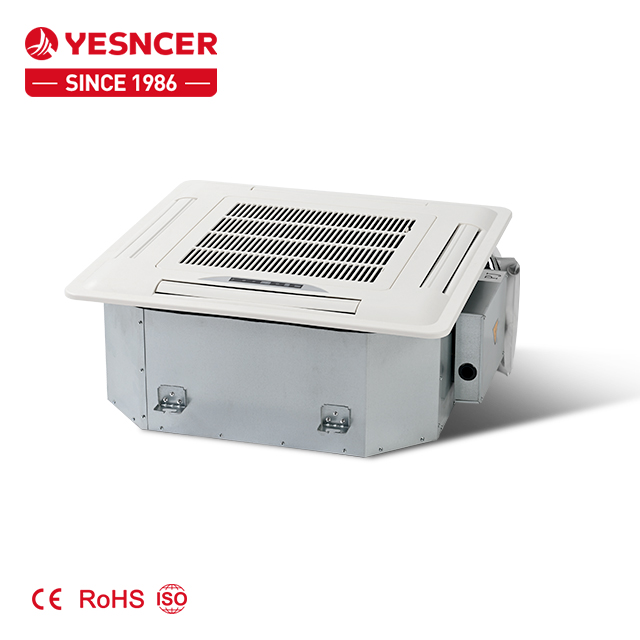
The YESNCER 4-Way Cassette Fan Coil Unit (Model: FP-34 ~ FP-238) is engineered for high-performance air conditioning — ideal for hotels, offices, hospitals, schools, and luxury residential buildings.