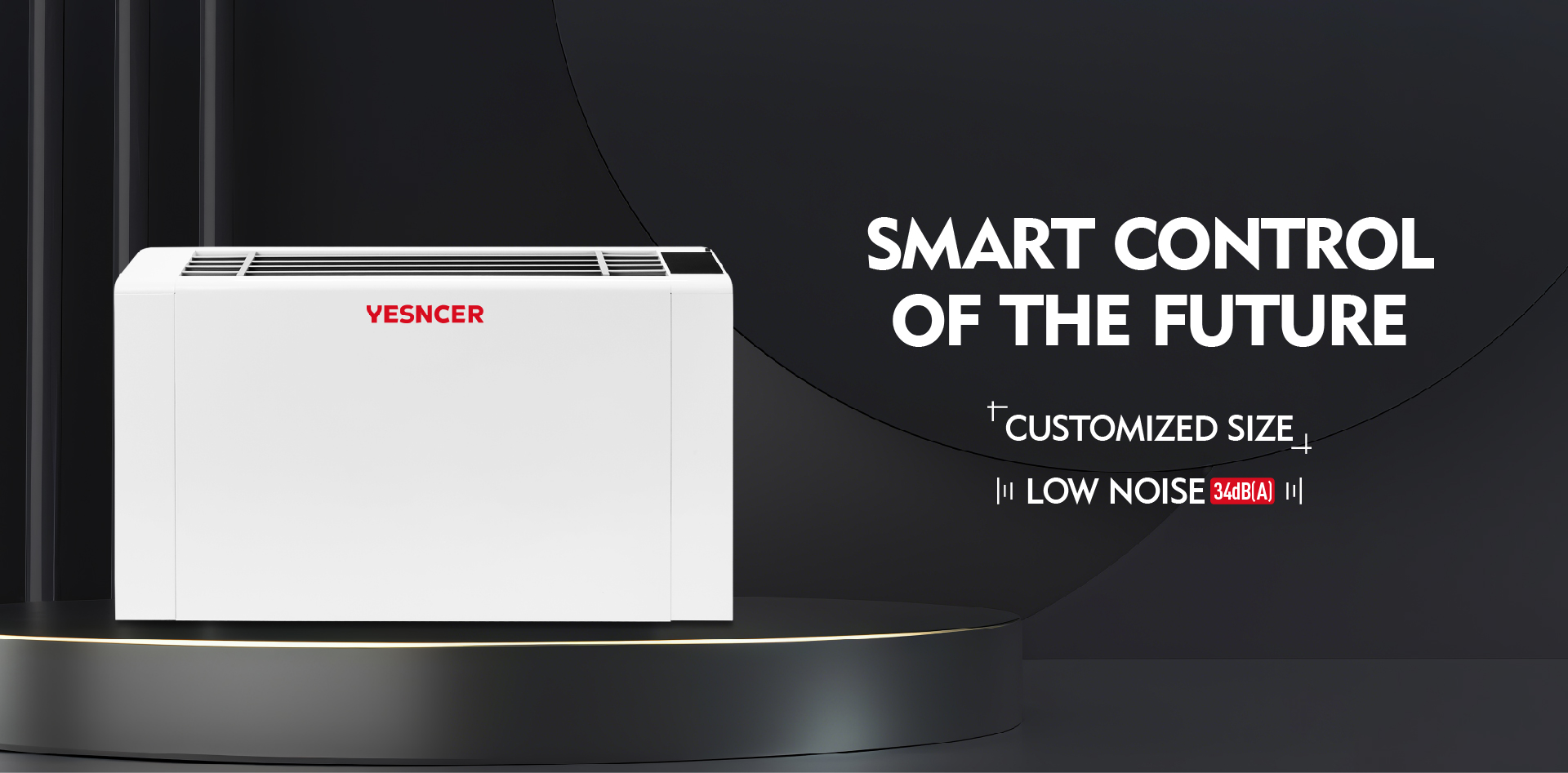
Things about fan coil installation are worth reading
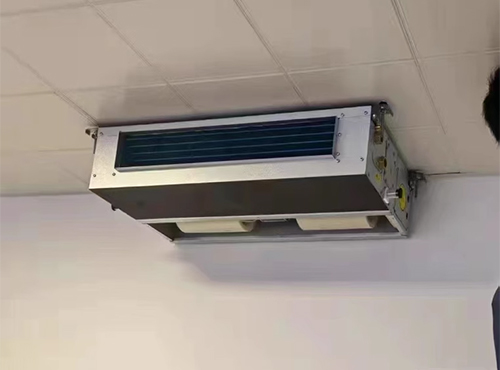
What is a fan coil unit?
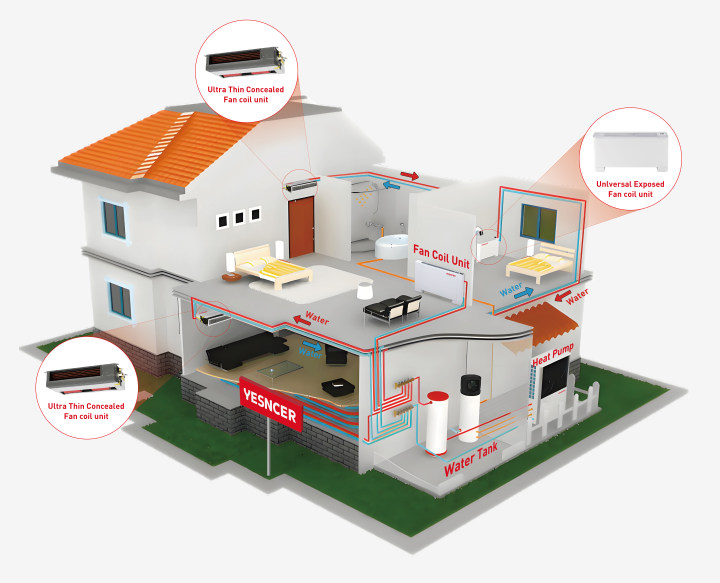
A fan coil unit is the terminal device of an air conditioning system. It continuously circulates the air in the room where it is located. The air is cooled (heated) after passing through the cold water (hot water) coil to maintain a constant indoor temperature.Fan coil units are key products for central air conditioning. They serve hotels, offices, hospitals, homes, and research institutions.To meet various needs, fan coil units come in many types. These include horizontal concealed fan coil units with return bellows and horizontal exposed units.Vertical concealed and vertical exposed units are also available. Cassette fan coil units offer two or four outlets. Wall-mounted fan coil units are another option.A fan coil unit consists of a low-noise motor and coils. It recirculates room air through its coils.Air cools or heats as it passes through cold or hot water coils. This process maintains a constant room temperature. For detailed introduction, please see:https://www.aircolder.com/experience/what-is-a-fan-coil-unit/

Installation specifications and practical tips for fan coil units
Fan Coil Specifications
- Rated air volume, indicated by the number after the national standard model × 10/h.
- Structural form: horizontal type is indicated by W; vertical type is indicated by L; card type is indicated by K; wall-mounted type is BG. Column type is LZ.
- Installation form: concealed installation is indicated by A; exposed installation is indicated by M.
- No indication without return air box; G with return air box.
- Water inlet direction: left water inlet is indicated by Z; right water inlet is indicated by Y.
- Usage characteristics: standard type has no code; residual pressure type is indicated by H plus a number.
Pre-installation requirements
Before installing the fan coil unit, the appearance inspection, three-speed operation and water pressure test of the unit should be checked.
Installation Guide
- Fan coil units are usually installed in the ceiling of the air-conditioned room, and the ceiling should have a movable inspection port to facilitate the overall disassembly and maintenance of the unit. The fan coil unit is fixed by independent supports and hangers, and should be easy to disassemble and repair. Whether the fan coil unit hanger uses an ordinary hanger or a vibration-damping hanger is determined by the design.
- When connecting the pipe to the fan coil, it is advisable to use a hose connection.

Electrical Connections
The supply and return valves and filters of the fan coil unit should be installed close to the coil unit, and all above the condensate tray.
1.1. The red line is the 220V live wire (L) directly connected to the live wire interface of the thermostat;
1.2. The blue line is the zero line (N), the coil unit, two-way valve, and thermostat are connected in series;
1.3. Green, brown, and yellow correspond to the high, medium, and low gears of the thermostat connected to the fan coil unit respectively;
1.4. The black line in the figure is the live wire of the two-way valve connected to the "open" circuit interface of the thermostat;
1.5. The control line is a 6-color 1.0 square national standard line.
Lifting requirements
When hoisting the fan coil, ensure it is firm and positioned correctly. Maintain a 0.003 slope toward the condensate tray outlet.Use double nuts to secure the hanging rod to the coil. For concealed coils, install a movable inspection door in the ceiling. This design allows easy unit maintenance.The presence of a return air box depends on the design. If there is no return air box, install the return air outlet directly on the ceiling. The ceiling space then acts as a return air cavity.If a return air box is included, connect the ceiling outlet to the return air box via ducts.
Types and Applications of Fan Coil Units
There are several types of fan coil units. Horizontal open-type units suit rooms without suspended ceilings. They work well in rooms with higher ceilings.Vertical open-type units fit rooms without suspended ceilings. These units suit places with lower ceilings. However, they are less effective than concealed installations.Horizontal concealed-type units are for rooms with suspended ceilings. They provide better effects and look more attractive.Understanding the installation location is important. Proper installation improves fan coil performance.To maintain central air conditioner efficiency, regular maintenance is essential. Increasing fan coil efficiency is crucial and cannot be ignored.
Precautions for fan coil installation
Valve and electrical connection requirements
When installing the fan coil, valves should be installed on the inlet and outlet pipes to adjust the water volume. Electric valves can also be used to control the thermostat. The connection method of the electrical appliances should be strictly in accordance with the electrical wiring diagram of the unit.

Inlet and outlet orientation guide
When installing, you should pay attention to the direction of the water inlet and outlet. In order to facilitate the installation of the pipeline, the fan coil has left inlet (outlet) and right inlet (outlet) water connection types to choose from. When judging, you should face the air outlet. If the inlet and outlet are on its left side, it is the left inlet, and on its right side, it is the right inlet. Vertical exposed coils are mostly rear outlet (inlet).
Drip Pans and Condensation Management
A water collection tray should be made under the manual and electric water valves on the fan coil and the hot and cold water pipes. The water collection tray can be connected to the fan coil water collection tray, or the manufacturer can be asked to lengthen the original water collection tray to ensure that the condensed water at the valve and other joints can be discharged along the water collection tray. In addition, the external insulation of the machine should be done to prevent secondary condensation.

Pipeline connection and insulation considerations
The water pipes are connected from the bottom to the top. Note that the torque should not be too large when connecting the pipes to avoid damaging the heat exchanger. The inlet and outlet pipes should be insulated. It is recommended to use polytetrafluoroethylene raw tape to seal the threaded connection. The drainage pipe should maintain a sufficient slope.
Determine the installation height and location
The installation height and position should be determined according to the drawings and the height of the civil ceiling to avoid the inability to install downward or sideways vents. At the same time, the elevation of the inlet and outlet pipes, the slope of the condensate pipe, etc. should also be considered, and they should be installed after being determined in coordination with other professionals.
Comparative analysis of fan coil units, duct units, VRFs, air-cooled heat pumps, and chillers
Function and control of combined air handling unit
Related Article
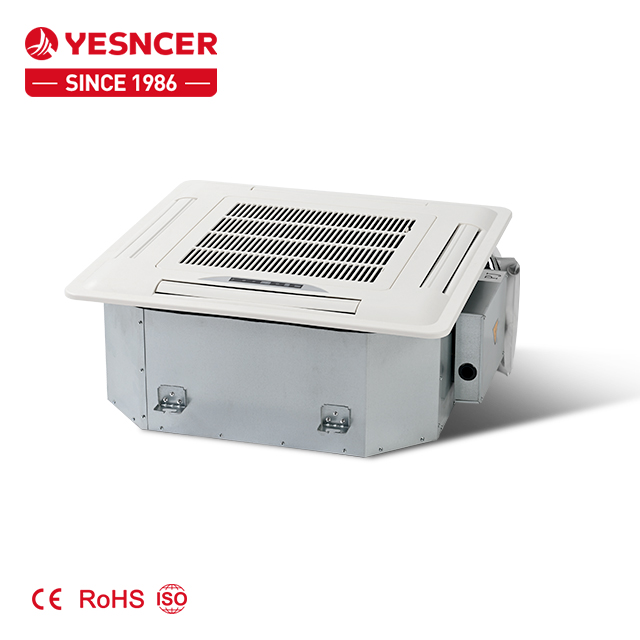
The YESNCER 4-Way Cassette Fan Coil Unit (Model: FP-34 ~ FP-238) is engineered for high-performance air conditioning — ideal for hotels, offices, hospitals, schools, and luxury residential buildings.