Function and control of combined air handling unit
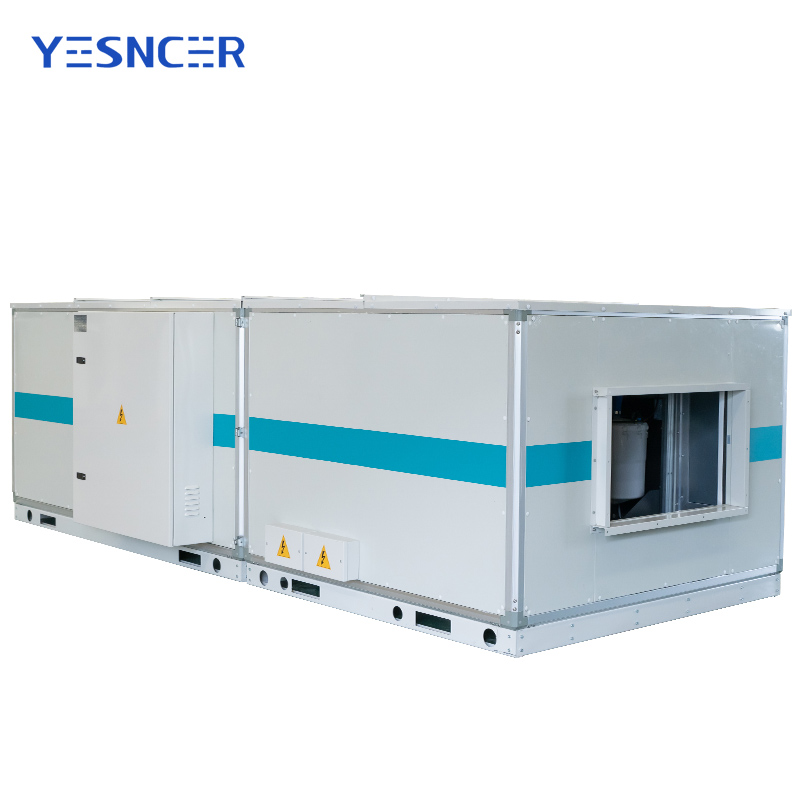
In modern HVAC systems, combined air handling unit (also known as air conditioning boxes) have become indispensable equipment in the industrial and commercial fields due to their multifunctional air handling capabilities. It can not only cool, dehumidify, dry, heat and humidify the air, but also filter and purify, supply and return air, and introduce fresh air, providing stable, comfortable and efficient air solutions for different places. Widely used in industrial production, medical and health, hotels, large commercial buildings, sports and entertainment centers and other environments, combined air handling unit meet the strict requirements of various places for air quality and temperature and humidity with their flexible configuration and high efficiency.
Combined air handling unit main components
Mainly consists of primary filter, medium filter, preheating coil, precooling coil, water washing humidification device, recooling coil, reheating coil, air supply fan, high-efficiency filter, non-return electric damper, etc.

Introduction to Steam Humidification Systems
Electrothermal Humidifier
The electrothermal humidifier uses electric heating to produce steam. It heats pure water and supplies water proportionally to maintain stable steam output. For high-precision control, SCR (silicon-controlled rectifier) drives the heater, improving accuracy. This method suits environments needing precise humidity control, like high-end spaces.
Electrode Humidifier
The electrode humidifier heats ordinary water through ion conduction to generate steam. However, it cannot use pure water due to low ion content. This method has lower accuracy and suits environments with general humidity requirements, such as industrial spaces.
Steam Humidification
Steam humidification generates steam through a steam boiler. A control valve adjusts the humidification amount precisely. It delivers stable output and works well in large spaces, such as clean rooms and industrial plants.
Two-Fluid Humidification
Two-fluid humidification uses high-pressure air to atomize water into a fine mist. The mist evaporates quickly to achieve humidification. This method suits environments needing rapid cooling and humidification, like large workshops.
Water-Washing Humidification
Water-washing humidification atomizes water and increases contact time with air. This ensures effective evaporation while combining air purification with humidification. It is ideal for environments requiring high air quality, such as HVAC systems.
Air Conditioner Control
Cleanliness Control
Air conditioning units control cleanliness by filtering external air particles. Components include primary filters, medium filters, and high-efficiency filters:
- Primary filter: Removes particles above 1µm.
- Medium filter: Filters particles below 1µm.
- High-efficiency filter: Captures particles below 0.5µm.

The air conditioning control system installs differential pressure switches on both sides of the filter to give real-time alarms for the degree of contamination of the filter. When the differential pressure at both ends of the filter exceeds the set value, an alarm will be issued on site and on the central computer configuration interface to promptly remind property management personnel to replace the filter and reduce the loss of system pressure.

Pressure Control
The air conditioning box forms air pressure through the supply fan. Static pressure sensors measure outlet pressure and maintain it through PID control.
Automatic mode: The central computer monitors fan operation and status in real-time. It also adjusts inverter frequency to maintain set pressures.
Manual mode: On-site switches control the system and inverter frequency.
Temperature and Humidity Control
The system uses hot and cold coils with humidifiers to control air temperature and humidity. Sensors measure outdoor conditions and adjust settings for winter or summer modes.
- Summer mode: Preheating coils remain off. Precooling and recooling coils lower absolute humidity. Reheating coils raise air temperature to meet indoor requirements.
- Winter mode: Control varies by humidification type.
Water-Mist Humidification
Preheating coils increase enthalpy to the required level. Water-washing or two-fluid humidifiers then raise humidity. Reheating coils adjust the temperature to meet indoor requirements.
A.Steam humidification: Install a temperature and humidity sensor at the air outlet of the air conditioner to measure the air outlet temperature and humidity of the air conditioner. By adjusting the hot water coil control valve, the amount of hot water is proportionally controlled to achieve the required indoor temperature; by adjusting the steam control valve, the amount of humidification is proportionally controlled to achieve the required indoor humidity.
B. Electric heating humidification: Install a temperature and humidity sensor at the air outlet of the air conditioner to measure the air outlet temperature and humidity of the air conditioner. By adjusting the hot water coil control valve, the amount of hot water is proportionally controlled to achieve the indoor temperature; by adjusting the heating rod voltage, the amount of humidification is proportionally controlled to achieve the required indoor humidity.
C. Electrode humidification: Install a temperature and humidity sensor at the air outlet of the air conditioner to measure the air outlet temperature and humidity of the air conditioner. By adjusting the hot water coil control valve, the amount of hot water is proportionally controlled to achieve the required indoor temperature; by adjusting the electrode voltage, the amount of humidification is proportionally controlled to achieve the required indoor humidity.
Air Valve Control of Air Conditioning Boxes
Fresh Air Units
Fresh air air conditioners typically have supply air valves but no inlet valves. The fan interlocks with the valve. When the fan starts, the valve opens first. When it stops, the valve closes afterward.
Return Air Units
Return air systems include fresh air valves, return air valves, and supply air valves. The fresh air and return valves interlock in reverse proportion. The fan operation also interlocks with these valves. When the fan starts, the valves open first. When it stops, the valves close last.

Variable Fresh Air Ratio Units
These units include fresh air valves, return air valves, and supply air valves. The fresh air and return air valves adjust dynamically to maintain ratios. The fan operation interlocks similarly, ensuring smooth operation.
Things about fan coil installation are worth reading
The Right Way to Use Fan Coil Units: Save Money the Easy Way
Related Article
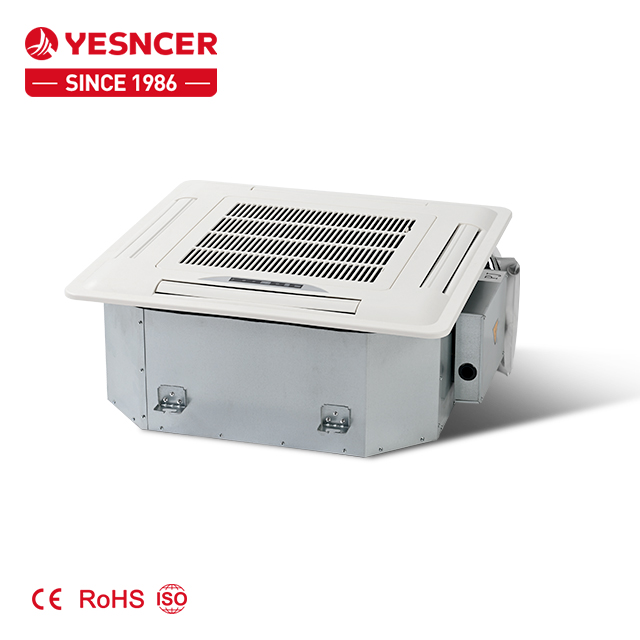
The YESNCER 4-Way Cassette Fan Coil Unit (Model: FP-34 ~ FP-238) is engineered for high-performance air conditioning — ideal for hotels, offices, hospitals, schools, and luxury residential buildings.